
Barbara Forbes

Azure Architect @ Zure, Microsoft Azure MVP, Microsoft Certified Trainer, and GitHub Star. Teacher @ LinkedIn Learning, Speaker and organizer @ conferences.

LinkedIn YouTube Bluesky Instagram GitHub Buy Me a Coffee
Barbara Forbes

Latest Updates

Latest Video

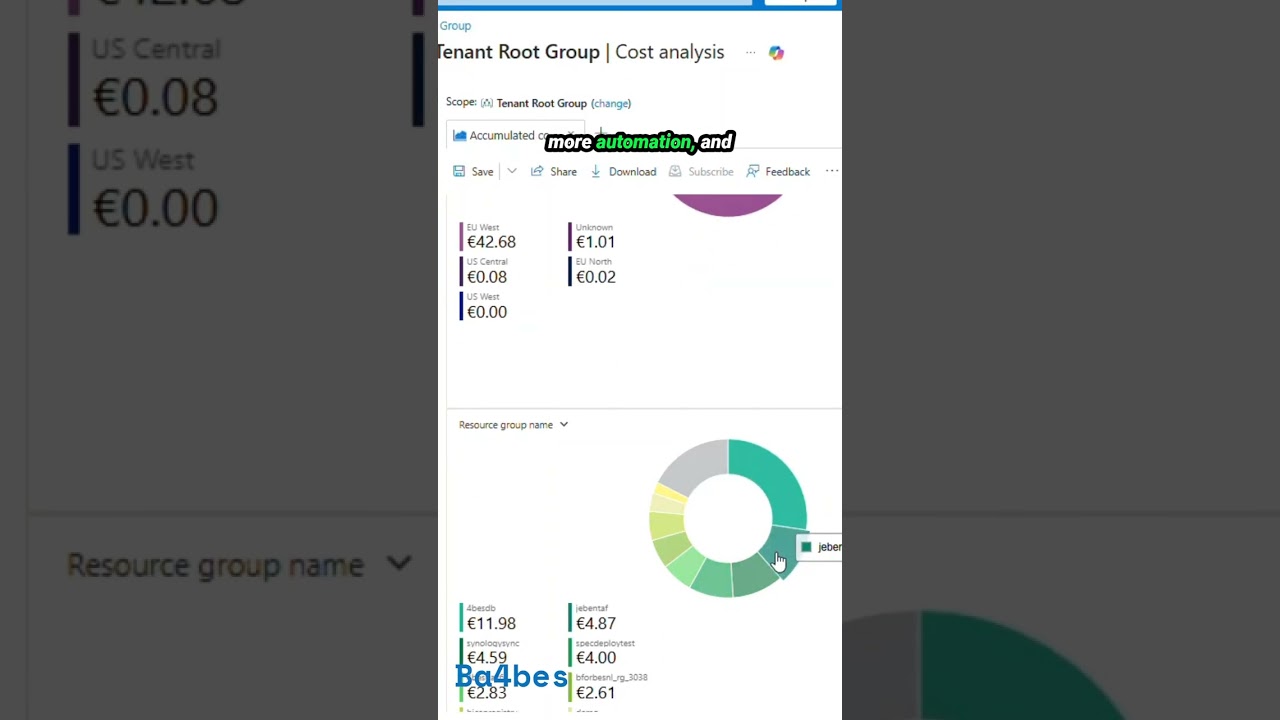
Merge, Squash, or Rebase? What Each One Actually Does to Your Git History  | git tip 26

Merge, Squash, or Rebase? What Each One Actually Does to Your Git History | git tip 26

Aug 13, 2026

Latest Posts

I'll be in Portorož, Slovenia in September. And not just for the stunning sea views I'll be there for NT Conference, the largest tech and business conference in Slovenia. It runs for the 31st time this year and I am happy to be part of it again. More information and tickets: www.ntk.si

Aug 18, 2026

Git Tip 26: When creating a PR, GitHub gives you three options: Merge commit, squash and merge, or rebase and merge. Not sure what they do and at this point to afraid to ask? Watch my new Youtube short www.youtube.com/@Ba4bes/shorts https://www.youtube.com/@Ba4bes/shorts

Aug 13, 2026

Online Courses

Video courses on development tools and cloud infrastructure.

LinkedIn Learning: Git Essential Training

LinkedIn Learning: Git Essential Training

Learn the fundamentals of Git version control, from basic commands to branching strategies and collaboration workflows.

1h 42m

25 minutes of Azure

Learn Azure Key Vault in 60 Seconds | One Minute of Azure

Learn Azure Key Vault in 60 Seconds | One Minute of Azure

Dec 28, 2025

View All Linkedin Courses View 25 minutes of Azure

Conference Sessions

Talks, presentations and workshops at tech conferences.

The Microsoft Cloud Adoption Framework: What the Docs don’t tell you

The Microsoft Cloud Adoption Framework for Azure promises a flexible environment where developers have the freedom to innovate while keeping data and resources secure. Sounds great right? It is, but real life implementations can often come with some challenges. Including the first world problem of too much documentation.In this session, we'll look at the Cloud Adoption Framework and how you can use it effectively. I will take your through each step of the Framework and the challenges that came with them in the real world implementations. Spoiler alert: It’s often not the technology that’s the problem! By the end of this talk you will have actionable knowledge to shape your own Azure journey to its fullest potential

Implementing Azure Policies: Before the Portal

As your Azure environment grows, you'll need to find ways to keep everything organized. Especially with structures like the Microsoft Cloud Adoption Framework, it's important to set boundaries to manage the endless possibilities that Azure has to offer. So you create policies to help maintain control, security, and compliance in your environment.But where do you begin? The options seem endless. Should you use all of them?In this talk, we'll look at the starting point. Guess what; it isn't the Azure portal. We'll see how to determine the policies you need and how to simplify your Azure experience rather than complicate it.We'll also address common challenges and mistakes in Azure policy as seen from the field. At the end, you will have a clearer understanding that will help you make the best choices and make Azure policy work for you.

Coding smarter with GitHub Copilot

AI is changing the way we work. But how do we actually create more value with it?You've seen what GitHub Copilot can do. But in this session, we will focus on what matters: how to get consistently better results, instead of feeling like you’re explaining your code to a toddler.Through live demos, we’ll explore how GitHub tools can be customized and managed to become your (slightly annoying) coworker. One that actually saves time, comes up with options you might miss, and occasionally surprises you in a good way.You’ll walk away with a clear overview and practical tips on which tools and models to use.Let's find out how we can make AI work for us to bring our ideas to life.

This title was written by AI — and that’s only the beginning

What happens when you let AI write your code, your posts, and your plans? Only one way to find out.In this talk, I share what happened when I let AI take over my workflow: writing full coding projects, managing my LinkedIn presence, scheduling my time, creating videos, and even teaching me new frameworks. From hallucinated pull requests to surprisingly useful insights, each experiment revealed how much (and how little) we can delegate to machines. I will tell you my experiences and if I could have predicted them beforehand. You’ll leave with real examples, honest takeaways, and a new sense of how you can let AI help shape your life, without losing the human logic behind it.

Trust, don't store: how WIF changes your deployment security

Does your deployment pipeline authenticate with a client secret? Then this session is for you. In the best case scenario, secrets live in a vault, get rotated on a schedule nobody loves, and occasionally expire at exactly the wrong moment. In the worst case they are stored somewhere unsecured or never rotate at all. Let's take away the risk with a far better option. Workload Identity Federation replaces stored credentials with a trust relationship. No secrets that can leak, no expiration at the wrong time, nothing stored outside of Azure. In this session we'll explore the systems behind WIF and OpenID Connect and how the two relate. We set up WIF from scratch in both GitHub Actions and Azure DevOps, connecting to Azure. You'll see how the trust model works and what configuration is important. We'll also cover the current limitations and what that means for your specific setup.By the end you will understand exactly how WIF works, have the steps to migrate your existing pipelines and a clear answer if anyone asks you if WIF is the most secure form of authentication

One Size Fits None: Make Azure best practices work for your organization

The Microsoft Cloud Adoption Framework promises a solid foundation. Azure Verified Modules promise consistent, reusable infrastructure. The Azure Security Benchmark will make sure your resources are protected and secured. And they deliver, but not without making them your own.With flexibility comes complexity. In this session we look at where Microsoft Azure best practices are strong, and where they might start working against you. Not because they are wrong, but because the average company is hard to find. We look through what the standards are and why they will or will not work for you. Maybe your company doesn't need the flexibility of AVM, which can be a pain to update. Maybe developers at your company don't want the freedom that comes with the Cloud Adoption Framework. And some policies in the Azure Security Benchmark can actually block built-in Azure resources. With these and more examples from the field we will pinpoint how you can make these standards work for your company. You will walk away with a clearer vision on what to adopt and what to adapt.

View All Sessions

Useful Resources

Links and resources referenced in my videos and content.

  • 🔗 Static Website Deployment workflow with GitHub Actions

    Referenced in Build Once, Deploy 3 Ways (Astro on Azure + GitHub Actions)
  • 🔗 ChatGPT Personalization

    Mentioned in the talk "This title was written by AI" and How I Got ChatGPT to Show Its Work (Custom Instructions)
  • 🔗 AzVerify

    A set of Copilot skills to sync between Azure, Bicep and the architecture diagram
  • 🔗 Copilot Pricing Sheet

    View the Copilot pricing and model guidance sheet with added explanations

This site is built with Astro v5.16.6, Tailwind CSS v4.1.18, TypeScript, Node.js ≥20

Click here to view the full GitHub Actions workflow file (opens in new tab)

© 2026 Barbara Forbes. All rights reserved.